Over half of consumers rate brand-owned websites as better experiences than multi-brand retailer sites. In a landscape where shoppers have more choice than ever, the brands winning online aren’t necessarily the ones with the best product. They are the ones delivering the best experience.
Ecommerce in 2026 is no longer just about having an online store. Global retail ecommerce sales are surpassing $3.8 trillion this year, and the brands pulling ahead are doing so by prioritising seamless, personalised, digital experiences over simply being present online. The bar has risen significantly. A website that doesn’t tell a compelling story, create genuine connection, or guide a user toward a decision is quietly costing brands revenue every single day.
The website is the salesperson
The most effective ecommerce websites do what a great salesperson does. They understand the customer, anticipate what they need, remove uncertainty, and make the next step feel obvious. That requires more than good design. It requires a clear brand foundation, deep knowledge of the prospect and customer base, a considered user experience, and content that communicates value at every touchpoint. It should capture the attention of the user from the moment they land on the homepage to the moment they complete a purchase.
A great salesperson doesn’t overwhelm a customer with every product at once. They listen, guide, and build confidence incrementally. Your website should operate the same way. The information architecture, the hierarchy of content and the placement of calls to action are decisions that shape whether a visitor moves forward or leaves. Most brands underestimate how much of their conversion problem lives in the experience rather than the product or the price.
Clarity converts.
The brands succeeding in digital commerce right now are those building intentional experiences that remove noise, resist the pressure to fill every surface, and focus on the moments that actually drive decisions. Conversion isn’t the result of volume – it’s the result of clarity.
This is particularly important at the point of purchase. Research consistently shows that reducing friction in the checkout process by simplifying forms, offering multiple payment options and providing clear delivery and returns information, has a direct and measurable impact on conversion rates. But friction begins long before checkout. It begins the moment a visitor can’t find what they’re looking for, doesn’t understand what makes a product worth buying, or feels uncertain about whether a brand can be trusted.
Trust is built through design as much as it is through reputation. A website that feels considered, consistent, and professionally executed signals to a visitor that the brand behind it operates to the same standard. That signal is often the difference between a browser and a buyer.
Emotional products demand emotional experiences
This is especially true for brands where the product carries an emotional dimension and the story behind what you’re selling is as important as the thing itself. In categories like food and beverage, lifestyle, homewares, apparel and wellness, the digital experience is the product. The way a product is photographed, described, and contextualised online determines whether a customer feels something about it before they buy it.
Brands that invest in this dimension of their digital presence, in the craft of how their products are presented and the narrative that surrounds them, consistently outperform those that treat their website as a functional catalogue.
The opportunity most brands are leaving on the table
The gap between a functional ecommerce website and a high-performing one is rarely about technology. It’s about intentionality and the decisions made about what to show, what to say, how to guide, and what to leave out. Most brands have the products. Most brands have the audience. What separates the ones that convert consistently is the quality of the digital experience they’ve built around both.
Investing in that experience isn’t a cost. It’s the most scalable salesperson your brand will ever have available at every hour, in every market, for every customer who finds you.
How we apply this in our work
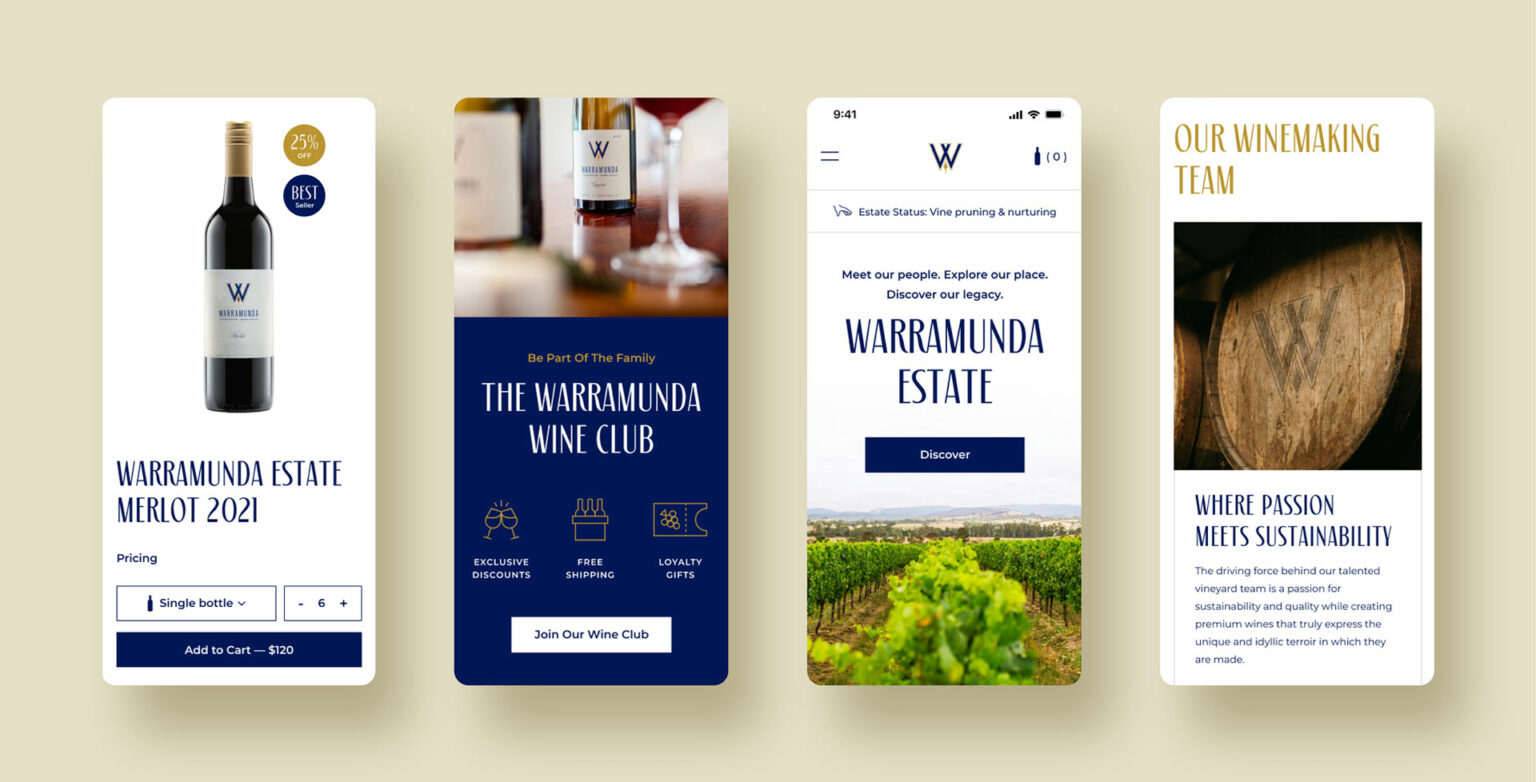
The concepts and knowledge discussed in this article has been gleaned directly from our experiences work with and developing on ecommerce platforms. A recent example of such work is the website we created for the winery, Warramunda Estate.